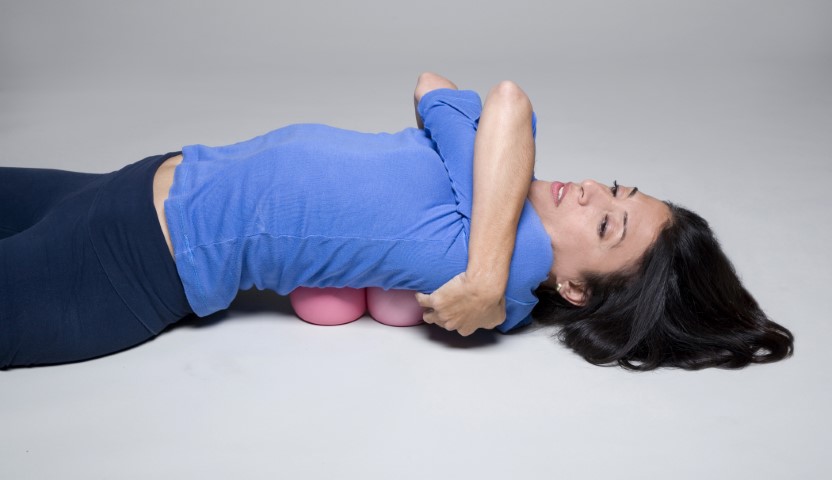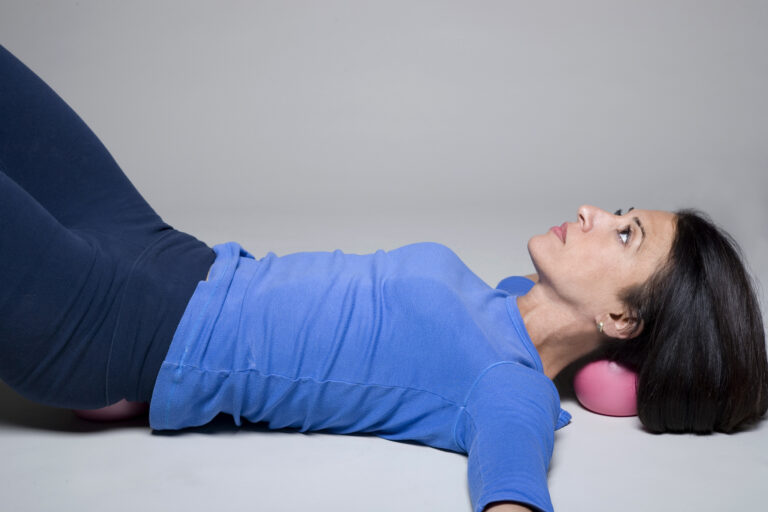
My next webinar, coming up on April 11 at 1:30 ET, is about what you can do in bed using the Miracle Ball Method to help you have a restful night’s sleep and wake up feeling ready to move.
We have to break falling asleep down into a few influential parts. Just like most of the mind-body experience, clumping it all together and focusing only on the result we want doesn’t usually work.
Stress, excess muscle tension, and how you react to stress and excess muscle tension are three very different things—all working for or against you.
This is what I describe in the Miracle Ball Method book as the Cycle of Pain.
Even though we’re not talking about pain here, having clarity about what to focus on makes all the difference in getting a restful night’s sleep.
While many people focus on the result—sleep—I focus on the physical body and how it can assist in a deep and profound way. I also never ask myself, “Do you want to lay on the balls now, or exhale and feel responses?”. I found that to be a big mistake. I know what to do. Our thoughts are very quick to override what the body can do easily with more thoughts. Give your body a chance and don’t look for any outcome, simply follow the directions. Become more familiar with what I call Body Time. Clarifying by acknowledging the difference between the thoughts, the physical feelings, and your behaviors (what you find yourself doing in reaction to the thoughts and physical sensations) is extremely beneficial to be more at ease overall.
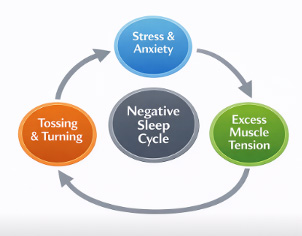
We can get into bed after a stressful day and find our thoughts causing us to toss and turn.
At the same time, our muscles can feel stiff and tight—from stress or simply from the kind of day you’ve had.
Maybe you sit or stand for long periods.
Maybe it was a hard workout or a tough game of tennis.
Maybe it’s taking care of children or managing a household.
It’s a long list—and at the end of the day, the body can hurt.
That physical discomfort makes it easier for thoughts to go negative.
Physical agitation aligns with mental stress.
Any or all of these experiences feed into each other.
So instead of focusing on the problem, let’s go to “door number three”:
What do you do about it?
Some people get more agitated.
Others get out of bed or start reading.
Here is what I suggest:
The beauty of the body is that when you ease excess muscle tension, it doesn’t just change the physical body—it also produces a sense of calm. Your thoughts will change as a result. Let me say that again, your physical body can change your thoughts. We usually keep the mind as the leader, and the body separate but they are the same place in many ways.
In this blog, I’ll remind you of a few specific directions.
Because asking yourself to “relax” or “be calm” is very difficult when the stress and excess muscle tightness are working against you.