

One of the biggest mistakes I see people make when they work out is assuming that movement is simply a matter of telling the body what to do.
Do this. Do that. Repeat the exercise. Build the muscle. Get stronger.
But there’s something important missing from that approach: clarity.
You can develop muscularity, practice a sport, study martial arts, or work on your dance technique and still not fully understand how you’re using your body. You may become very good at repeating a movement without necessarily discovering whether there’s another way to experience it. One that might improve the way you do the movement freeing you from chronic back aches, knee injuries, or shoulder stiffness.
Muscularity without clarity leaves an important part of movement unexplored.
The Miracle Ball Method offers a different approach. It invites you to develop a deeper connection with your physical body, not by doing more, but by experiencing how your body responds when you give it a chance.
How Did We Learn to Move in the First Place?
Think about young children learning to move. They fall down and get back up. They reach, roll, sit, stand, and eventually walk. Through experience, they discover how to adjust their bodies to accomplish what they’re trying to do.
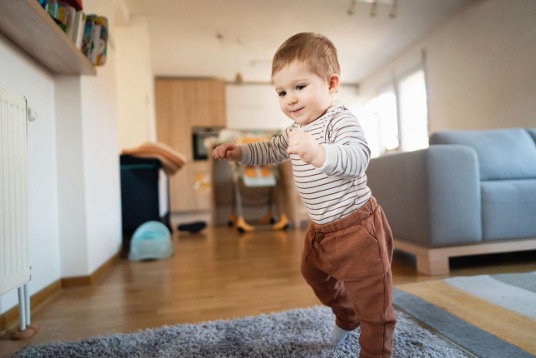
They don’t need someone to explain every detail of balance or alignment. They learn through the sensations of experimentation. That leads to what works and feels good.
As we grow older, we learn a great deal by imitating others, following instructions, mindlessly repeating movements. We develop goals through sports, martial arts, dance, and exercise. We learn what we’re supposed to do and work toward doing it well.
There’s nothing wrong with instruction or repetition. Both can be valuable. But somewhere along the way, we can become so focused on achieving a result that we lose touch with the experience of moving itself.
We know what we want our bodies to do. But are we paying attention to how we’re getting there?
The Miracle Ball Method invites us to explore that question.
The Moment Before Action
Think about an Olympic gymnast just before beginning a routine, or an NFL linebacker preparing for the whistle. There’s often a moment of gathering themselves before they move into action.
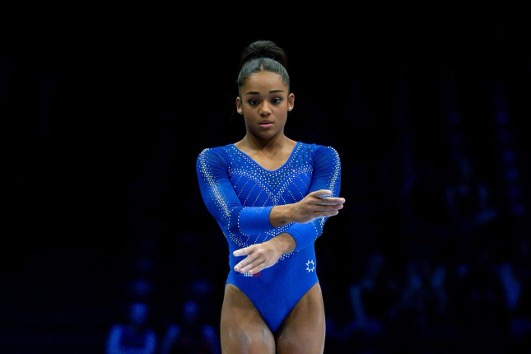
They’re not meditating. They’re preparing to act.
That moment offers an important insight: physical action and our connection with the body don’t have to be separated. We can bring awareness to our physical experience as part of preparing to move.
Yet many of us treat awareness and action as two different things. We either concentrate on performing an activity or stop to pay attention to ourselves. We rarely consider how the two might work together.
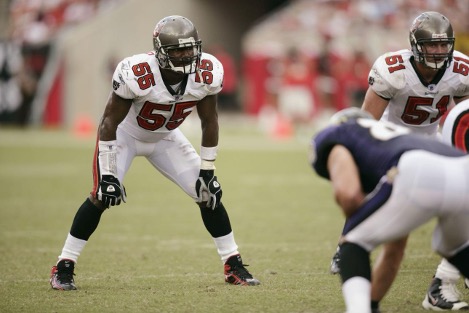
What if the connection between feeling and doing is just as important as the action itself?
You don’t need to be an elite athlete to explore this. You don’t even need to stop for a full minute. Sometimes, all it takes is a brief pause—long enough to notice what’s happening in your body before you continue. The nervous system is lightening fast giving you the feel of the whole body.
Stopping isn’t the opposite of action. It can be part of preparing for action.
What Happens When We Keep Repeating the Same Patterns?
As adults, we often develop familiar ways of moving, standing, bending, and breathing. Over time, these patterns can become so automatic that we barely notice them.
When something hurts, we may try to push through it, stretch it, strengthen it, or tell ourselves to correct the way we’re moving.
I’ve had many injuries of my own, and I’ve spent plenty of time trying to work my way through problems by doing more. I’ve also learned to appreciate the value of giving my body a different kind of experience.
If you keep approaching movement in the same way, you may continue to experience familiar stresses and limitations. You might find yourself saying, “Oh, yes, that’s the weak foot I sprained when I was eleven.”
Perhaps the old injury is still relevant. Perhaps other factors are contributing, too. The point isn’t to dismiss your experience or assume that every discomfort has the same explanation.
It’s to recognize that there’s more to explore than simply telling your body what to do.
Your body is constantly providing information through sensation, movement, and breathing. But when you’re focused on accomplishing a task, you may not notice all of it.
What happens when you give yourself a moment to pay attention?
What Makes the Miracle Ball Method Different?
The Miracle Ball Method gives you an experience of your physical body.
Notice what I didn’t say: I didn’t say it tells you how to move your body. There’s a difference.
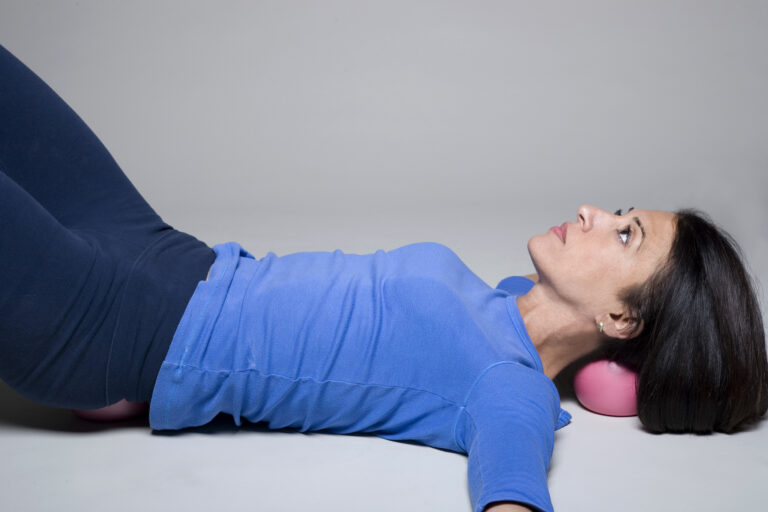
The method begins with two simple directions: feel the weight of the part of your body resting on the ball, and notice you’re breathing.
You aren’t trying to force a stretch, strengthen a muscle, or make your body conform to a particular position. You’re allowing yourself to experience what happens when you rest on the balls and pay attention.
That may sound like you’re not doing much. But you’re doing something important: you’re shifting from trying to make your body do something to noticing what your body is actually experiencing.
Your nervous system is continually processing information from your body and its surroundings. Sensations of weight and changes in breathing are part of that information. By slowing down enough to notice them, you may become aware of patterns that usually go unnoticed.
You aren’t being told what your body should feel. You’re discovering what you feel.
And that is a fundamental difference.
Sometimes, You Have to Stop to Discover Something New
When you remove the balls and rest on the floor, take a moment to notice your experience.
Does your back feel different? Are your shoulders more at ease? Has your breathing changed? Perhaps you notice a difference in how you make contact with the floor.
Your experience may be subtle. It may be surprising. And it may be different from someone else’s.
Over the years, people in my classes have described feeling more comfortable or less restricted after using the balls. Some have expressed surprise that they could experience a change without feeling they had done very much.
That’s part of the story behind the name Miracle Ball Method.
But the interesting thing isn’t that you did nothing. It’s that you stopped trying to make something happen and gave yourself an opportunity to notice what was happening.
Think about driving a car. When you approach an intersection, stopping is an action. It gives you a chance to look around, gather information, and decide when to move forward.
The pause serves a purpose. It helps you respond to what’s happening rather than simply continuing automatically.
The same principle can be explored through your physical experience.
Feel your weight. Notice your breathing. Give yourself enough time to register what’s happening. You don’t have to force a particular response, and you don’t have to judge the experience.
You’re learning to pay attention to information that can be part of how you move.
Clarity and Muscularity Belong Together
The purpose of the Miracle Ball Method isn’t to stop moving or spend all your time analyzing your body. It’s to explore a connection between physical sensation and action that can be overlooked when we’re focused only on effort and performance.
Muscularity matters. Strength matters. Practice matters.
But how you experience your body matters, too.
When you develop a greater awareness of how your body responds, you have an opportunity to explore movement differently. You can begin to question familiar patterns, notice changes, and discover possibilities you may not have considered before.
This isn’t about choosing between awareness and action, or between relaxation and exercise. It’s about recognizing that your experience of your body and the way you use it are connected.
You don’t need to wait until something hurts to explore that connection. And you don’t need to set aside a long period of time.
Sometimes, a moment is enough to begin noticing.
Don’t Take My Word for It. Experience It for Yourself.
You can approach the Miracle Ball Method with curiosity, even a healthy dose of skepticism.
Follow the two simple directions: feel the weight of your body on the balls, and notice your breathing.

You don’t have to make anything happen. Simply pay attention.
When you remove the balls, notice what you experience. Then, as you return to your usual activities, pay attention to how you move.
The goal isn’t to promise a particular result. It’s to give yourself an opportunity to discover something about your physical experience that you may not have noticed before.
You don’t have to stop moving to connect with your body. You just have to stop long enough to notice.
And that connection isn’t separate from action. It’s part of discovering how you move, how you respond, and how you can continue to learn from your body throughout your life.