

Part Two of the Do It Different Blog
What’s wrong with exercise?
Nothing.
It’s the way we do exercise.
Mindless, repetitive, imitative movements don’t always benefit us in the way we hope they will. We can follow all the “right” instructions, do the prescribed exercises, and still find ourselves feeling stiff, hurting, or stuck in old patterns.
That’s where doing it differently comes in.
From the Balls to Everyday Movement
There are two important parts to the Miracle Ball Method.
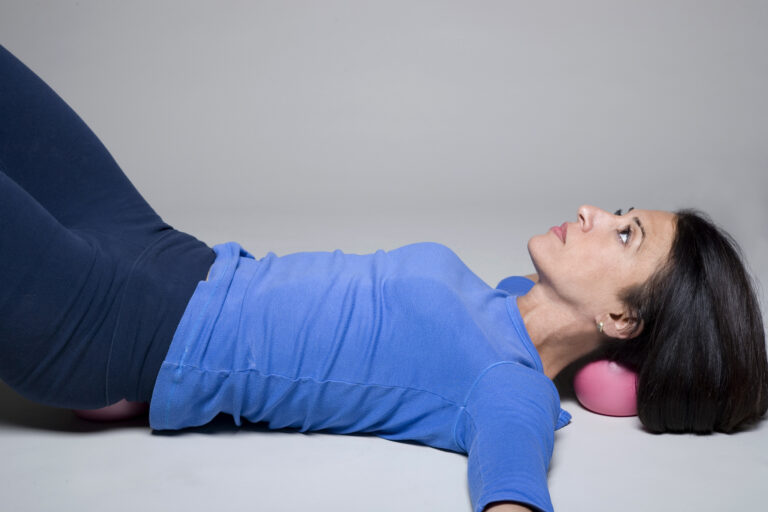
The first is learning the basics of the method: the ball placements, how to use the balls to stimulate your nervous system, and how to allow your body to make its own adjustments.
As you practice, you begin to experience what I call your body dialogue—a conversation that happens in milliseconds between what you feel physically and how your nervous system responds.
But there is another important step:
Taking that experience into everyday movement and exercise.
And that’s where Part Two of this conversation gets a little more complicated.
Information Isn’t the Same as Experience
We have an incredible amount of information available to us about exercise and the body.
But information and personal experience with your body are two completely different things.
Because we have so much information, we tend to do one of two things. We either search for the perfect exercise, or we try to relax, release, and let go.
Neither of those things, by themselves, necessarily solves the problem.
What I want to explore is something different:
Having a personal experience with your body.
Let me give you an example.
When “Letting Go” Isn’t Enough
I have a student who really loves the Miracle Ball Method and does extremely well with it. He has dealt with significant stiffness and tightness in his back, particularly between his shoulder blades, and he gets tremendous benefit when he goes deeper into understanding the method.
He has also done a lot of yoga and deep-breathing work, which has helped him in the past.
But when we introduce more traditional exercises—what I call Whole Body Moves—something interesting happens.
He becomes extremely stiff when doing them.
The wonderful sensations he experiences during the Miracle Ball placements seem to disappear when he moves into deeper stretches or more traditional exercises.
He either forces the movement, fights against it, or tries to go completely limp.
None of those choices gives him what he needs.
Bridging the gap between what we think we should be doing when we exercise and what our body is trying to do for us can be strengthening and healing—and it is what my body craves.
Bodies love to move.
Your Body Is Your Partner
I began asking him to change how he moves.
Rather than simply trying to stretch farther, I asked him to bring his understanding of what happens on the ball into his movement off the ball.
For example: How does your weight transfer when you’re on the ball?
Remember the way your body breathes when your weight transfers—whether you are standing or lying on the floor, experiencing all the parts of your body differently.
What happens when you bring that same experience into your familiar exercises?
Then I asked him to notice all of these responses when he was doing very familiar exercises, and none of that was there. He began to stiffen and hold his breath.
Is holding your breath actually something your body would naturally choose to do?
This is where he would often say, in effect, “Okay, I’ll let go.”
But simply going limp doesn’t solve the problem either.
When you completely collapse, your body loses its sense of the whole. Instead of being engaged in the movement, it can become almost like “dead weight.”
Tension is a good thing!
There is a good kind of tension in the body.
It’s natural. It’s responsive. It gives the body support and information.
That’s what I mean by having a personal experience with your body.
When you use the Miracle Balls, your body naturally begins to shift and redistribute weight. I want you to notice that.
It is a very specific adjustment your body is making.
But if you don’t notice it, you may actually be preventing that adjustment from happening.
That is one of the reasons we have classes, and one of the reasons I’m writing these blogs.
Sometimes, even while we are doing the ball placements, we are still isolating one part of the body from another. It’s part of the way exercise has traditionally been taught.
There is nothing wrong with exercise.
Let’s just begin to do it differently.
Take the Miracle Ball Experience Beyond the Ball
That’s why, during classes, I add Whole Body Moves and more traditional exercises.
I want you to discover that you can take the way you move on the ball and bring that experience into bigger, stronger movements.
And your breath becomes an important part of the conversation.
Your breath can tell you whether or not you are allowing your body to make adjustments.
Because your body really is your partner.
It’s not just information.
It’s not intellectualization.
It’s not imitation.
And it’s not repetition.
It’s an experience.
It’s an experiment.
And when you work with your body instead of simply telling it what to do, you begin to realize that you are the one in control.
Use that control to stop intellectualizing your body.
Instead, experience how your body can move beyond the ball.