

Last week I wrote a blog called Are You Afraid of Your Body? Some of you might be wondering: What do I do about it? Or maybe you’re not convinced. Perhaps it doesn’t make sense to connect pain with fear.
Sometimes we experience pain and think, Well, that has nothing to do with being afraid. And each person interprets pain differently—but that’s another blog.
When Fear Changes the Way We Move
If you find yourself worrying about what movements you should or shouldn’t do, wondering if movement will hurt you, or limiting your activity because you’re afraid of creating more pain, that fear may already be affecting your relationship with your body.
If you already live with chronic pain, chronic injuries, or elevated stress, all of that can create anxiety around the physical body. Not for everyone—but for many people.
And this anxious feeling has different levels. For some, it may be mild. For others, it can become extremely intense.
What Happens in the Body
So let’s move into what to do about it—and how the Miracle Ball Method can help.
One of the things that often happens when we become fearful of physical sensations is that our breathing changes. We begin holding “excess” tension in the muscles, which can reduce circulation and lessen our ability to truly feel the body.
I always think it’s odd that, professionally, I often have to ask people to feel what they don’t feel.
Having been there myself, I understand how difficult that can be. When someone says, “Feel your body,” it can feel confusing. It’s like the expression: You don’t know what you don’t know.
At a very young age, I had no idea how disconnected I was from my body. I only knew I couldn’t move my right leg, and that I lived with chronic pain and depression.
The Miracle of the Human Body
When you practice the Miracle Ball Method—and the real miracle, again, is the human body—you begin allowing the natural basics of living on this planet to benefit you.
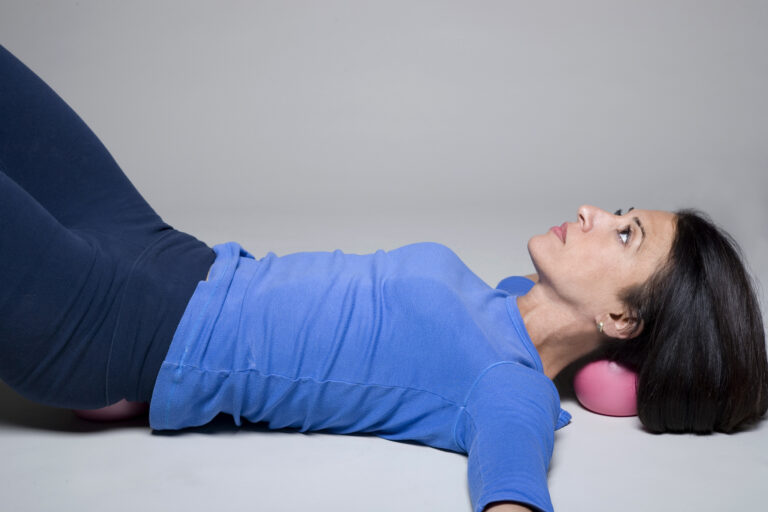
The ball acts as a tool. When you rest on it—not push, not aggressively massage, and not try to beat the tension out of your body—you begin sensing your weight in a different way.
That simple act helps interrupt the constant clenching patterns many people live with every day.
Clenching can reduce circulation, limit blood flow, and keep the body stuck in positions that contribute to ongoing pain in the same areas over and over again.
It’s Not About Forcing Flexibility
One of the most important things the Method teaches is that healing is not about becoming super limber or extremely flexible.
It’s about understanding what you are doing with your body.
Most people are holding their breath throughout the day, often without realizing it. So simply telling yourself to “take a deep breath” isn’t always the answer. You can’t override chronic breath-holding by forcing yourself to breathe deeply.
That may create temporary relief, but many people find themselves holding their breath again shortly afterward because the muscles themselves are gripping and restricting the natural flow of air.
This becomes part of the cycle of pain I talk about in the Miracle Ball Method book.
Allowing the Body to Help You
As you begin to feel your weight on the ball, you also begin allowing the body to undo what you do to it all day long.
This connects to the relationship I spoke about in the previous blog: understanding that your body knows where to go. It knows how to breathe. It knows how to move.
But many of us interfere with that process. We’ve become highly intellectual and often fearful, treating the body as if it has no innate sense of balance and breath.
Yet when you rest your weight on the ball and begin noticing how you breathe—which is deeply individual—you allow circulation to return. And that can create a comforting realization:
Your body is your ally, not your enemy.